
Home › Learn › Compounded Semaglutide
Compounded MedicationsCompounded semaglutide: what patients should know
Semaglutide is available not only as brand-name injectable GLP-1 medications, but also as compounded formulations prepared by licensed pharmacies. Compounding is a legitimate, regulated part of American pharmacy — but the space also attracts sellers who cut corners. Here's how to understand what compounded semaglutide is, why it exists, and how to tell a careful program from a red flag.
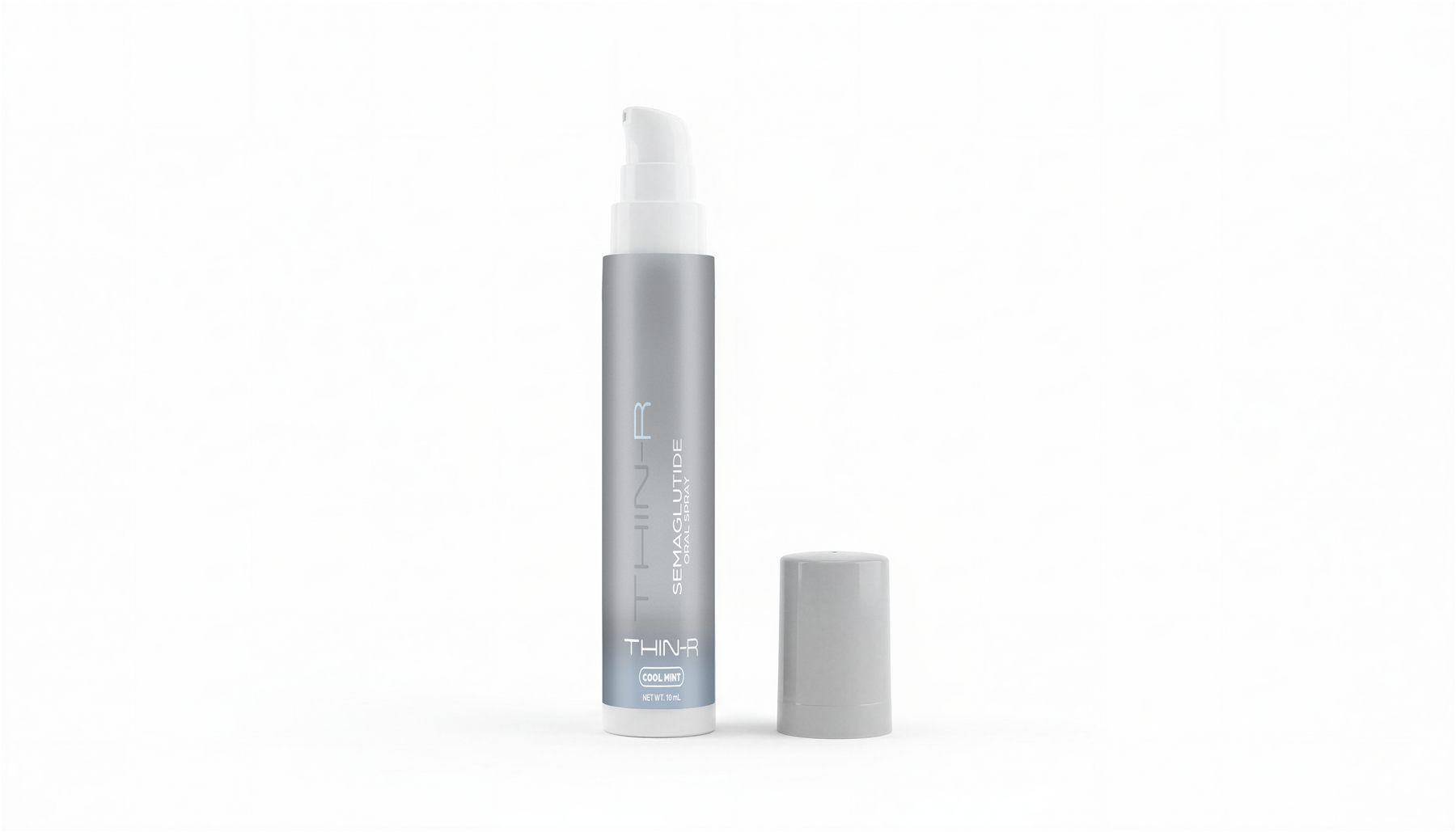
THIN™ packaging shown is a licensed, USP-compliant component. The medication is a compounded drug — not FDA-approved — prepared for each patient by an independent licensed 503A pharmacy pursuant to a prescription.
What "compounded" actually means
A compounded medication is one prepared by a licensed pharmacy for an individual patient, pursuant to a valid prescription from a licensed provider. In the United States, most patient-specific compounding happens at state-licensed 503A pharmacies, which operate under state boards of pharmacy and federal law. Compounding has existed for as long as pharmacy itself — it's how patients get formulations, strengths, or delivery formats that aren't commercially manufactured.
One important distinction: compounded medications are not FDA-approved. The FDA approves specific manufactured drug products; it does not review individual compounded preparations for safety, effectiveness, or manufacturing quality. That doesn't make compounding illegitimate — it means the safeguards live elsewhere: in state licensure, pharmacy quality standards, and the judgment of the licensed provider who writes the prescription.
Why compounded semaglutide exists
Compounded semaglutide emerged for several practical reasons. Injectable GLP-1 medications have gone through well-publicized periods of limited availability. Some patients cannot or prefer not to use needles. And some patients — particularly those in a maintenance phase after initial weight loss — work with providers who determine that a different format or dosing approach fits their situation. Compounding pharmacies can prepare semaglutide in alternative delivery forms, such as sublingual sprays, when a licensed provider prescribes them for a specific patient.
None of this changes the fundamentals: semaglutide is a prescription drug in every form. Any legitimate compounded version requires a valid, patient-specific prescription, no matter how it's packaged or marketed.
Questions worth asking before you commit
- Who reviews my health history? A legitimate program involves a licensed provider who evaluates your medical history, medications, and goals before any prescription is written — and who can decline to prescribe.
- Which pharmacy prepares the medication? You should be able to learn that the dispensing pharmacy is licensed, and in what state. Reputable programs are transparent about this.
- What exactly is in the formulation? Ask about the active ingredient, its form, and the strength. Vague answers are a warning sign.
- What happens if I'm not a candidate? A trustworthy answer is simple: no prescription is issued, and the medication is not dispensed. Payment should never guarantee a prescription.
- Who do I contact with side effects or questions? There should be a clear path back to a licensed provider, not just a customer-service inbox.
Red flags to avoid
Regulators and pharmacy boards have repeatedly warned about problem sellers in this space. Be cautious of any of the following:
- No prescription required. Semaglutide is prescription-only. Anyone offering it without provider review is operating outside the law — and you have no idea what you're actually receiving.
- No identifiable pharmacy. If you can't find out which licensed pharmacy prepares and dispenses the product, walk away.
- "Research use only" labeling. Products sold as research chemicals are not prepared for human use and bypass every patient safeguard.
- Guaranteed results or approval. No legitimate provider guarantees weight-loss outcomes, and no legitimate program guarantees you'll be prescribed anything.
- Pressure tactics. Countdown timers, "only 3 left" banners, and pushy upsells are marketing behaviors, not medical ones.
- Salt forms of the active ingredient. The FDA has stated that semaglutide salt forms — such as semaglutide sodium and semaglutide acetate — are different active ingredients than the base form used in FDA-approved products, and that it is not aware of a lawful basis for their use in compounding. It is fair to ask which form a program’s formulation uses.
What legitimate sourcing looks like
The standard is straightforward: a licensed provider reviews your health history, decides whether a compounded semaglutide product is appropriate for you specifically, and — only if it is — writes a prescription that a licensed pharmacy fills for you by name. That's the model behind prescription-only compounded products like THIN™, which is not FDA-approved and is dispensed only if a licensed provider determines it is appropriate. You can read about how the provider-review process works, or take a 60-second eligibility check to see whether a provider conversation makes sense for you.
On that sourcing question specifically, the THIN™ formulations are prepared using the base form of the active ingredient — the same active ingredient used in the corresponding FDA-approved medicines — rather than a salt form. As always, an independent licensed pharmacy prepares each order and is identified on what the patient receives.
Compounded semaglutide isn't automatically better or worse than any other option — it's a category with real rules. Patients who understand those rules are far better equipped to avoid the sellers who ignore them.
Important safety information
- • This article is educational only and is not medical advice. Always consult a licensed healthcare provider about starting, stopping, or changing any medication.
- • THIN™, THIN-R™, and THIN-ST™ are prescription-only compounded medications, prepared by licensed 503A pharmacies. They are not FDA-approved, and are dispensed only if a licensed provider determines they are medically appropriate.
- • Payment does not guarantee a prescription. Individual results vary.