
Home › Learn › Tirzepatide vs. Semaglutide
Know Your MoleculesTirzepatide and semaglutide: what's the difference?
Both molecules belong to the same broad family of metabolic medications, and both are active ingredients in widely prescribed injectable GLP-1 medications. But they are not the same drug. The clearest way to understand the difference is to look at the receptors each one targets — and what those receptors do in the body.
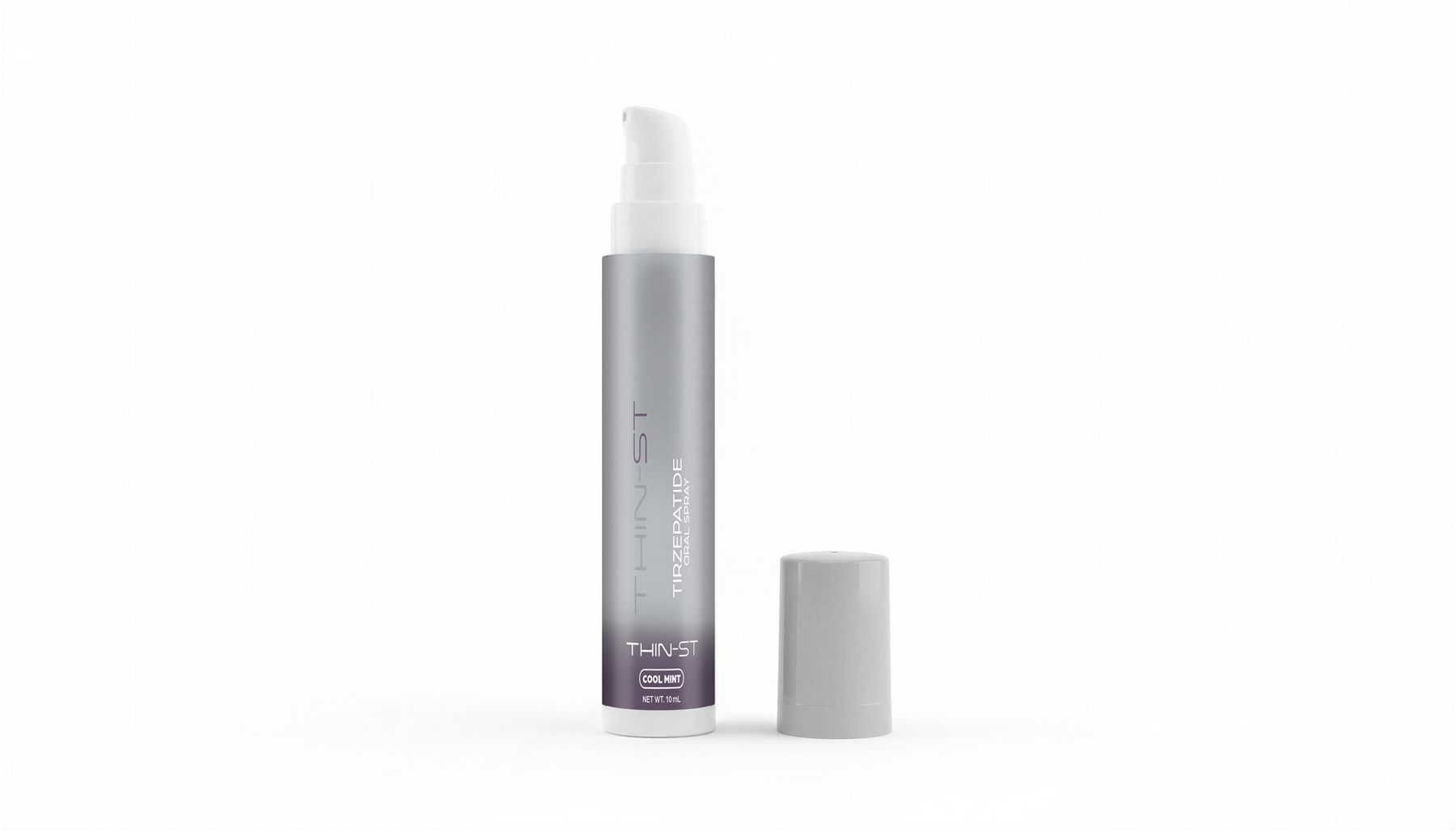
THIN™ packaging shown is a licensed, USP-compliant component. The medication is a compounded drug — not FDA-approved — prepared for each patient by an independent licensed 503A pharmacy pursuant to a prescription.
Both are incretin-based medications
After you eat, your gut releases hormones called incretins. Two of the most studied are GLP-1 (glucagon-like peptide-1) and GIP (glucose-dependent insulinotropic polypeptide). These hormones help coordinate the body's response to food: they support insulin release when blood sugar rises, influence how quickly the stomach empties, and send satiety signals that contribute to feeling full.
Semaglutide and tirzepatide are both synthetic peptides engineered to imitate incretin activity while lasting far longer in the body than the natural hormones, which break down within minutes. Where they differ is in which incretin receptors they activate.
Semaglutide: a GLP-1 receptor agonist
Semaglutide is a single-receptor medication. It is designed to activate the GLP-1 receptor, mimicking the action of natural GLP-1. Through that one pathway, it is associated with effects that include supporting satiety signaling, slowing gastric emptying, and helping moderate post-meal blood sugar. Semaglutide has been studied extensively over many years and is one of the most widely recognized molecules in this category.
Tirzepatide: a dual GIP/GLP-1 receptor agonist
Tirzepatide takes a different structural approach. It is a single molecule engineered to activate two receptors — both the GLP-1 receptor and the GIP receptor. GIP is the other major incretin hormone, and researchers believe it plays complementary roles in insulin response and possibly in how the body handles fat storage and energy balance, though the science on GIP's full contribution is still developing. Because tirzepatide engages both pathways, it is often described as a "dual agonist" or "twincretin."
So which one is "better"?
That's not a question an article can answer — and you should be skeptical of any marketing that tries. Clinical research programs for the two molecules used different designs, populations, and endpoints, and individual responses to either molecule vary considerably. Side-effect profiles are broadly similar in category (gastrointestinal effects are the most commonly reported for both), but individual tolerance differs from person to person.
The honest answer is that the right molecule — if either is appropriate at all — depends on your health history, your goals, your prior experience with GLP-1 therapy, and the judgment of a licensed provider who has reviewed all of it.
Where compounded sprays fit in
Both molecules are available in prescription-only compounded formats prepared by licensed pharmacies, including sublingual sprays designed for the maintenance phase after initial weight loss. Healthy Sprays' THIN™ and THIN-R™ contain compounded semaglutide, and THIN-ST™ contains compounded tirzepatide; all are prescription-only, are not FDA-approved, and are dispensed only if a licensed provider determines they are appropriate for you. If you're curious how a sublingual format works, see why a spray, or take the 60-second eligibility check to see whether a provider conversation makes sense.
Important safety information
- • This article is educational only and is not medical advice. Always consult a licensed healthcare provider about starting, stopping, or changing any medication.
- • THIN™, THIN-R™, and THIN-ST™ are prescription-only compounded medications, prepared by licensed 503A pharmacies. They are not FDA-approved, and are dispensed only if a licensed provider determines they are medically appropriate.
- • Payment does not guarantee a prescription. Individual results vary.