
Home › Learn › Delivery Routes Compared
Choosing a FormatOral sprays vs. pills vs. injections: delivery routes compared
The same category of medication can come in more than one format, and the format you take shapes your daily routine as much as the medicine itself. This is a neutral look at how oral sprays, pills, and injections differ in practical terms — convenience, routine, and storage — without any claims about which one works better. That's a conversation for you and a licensed provider.
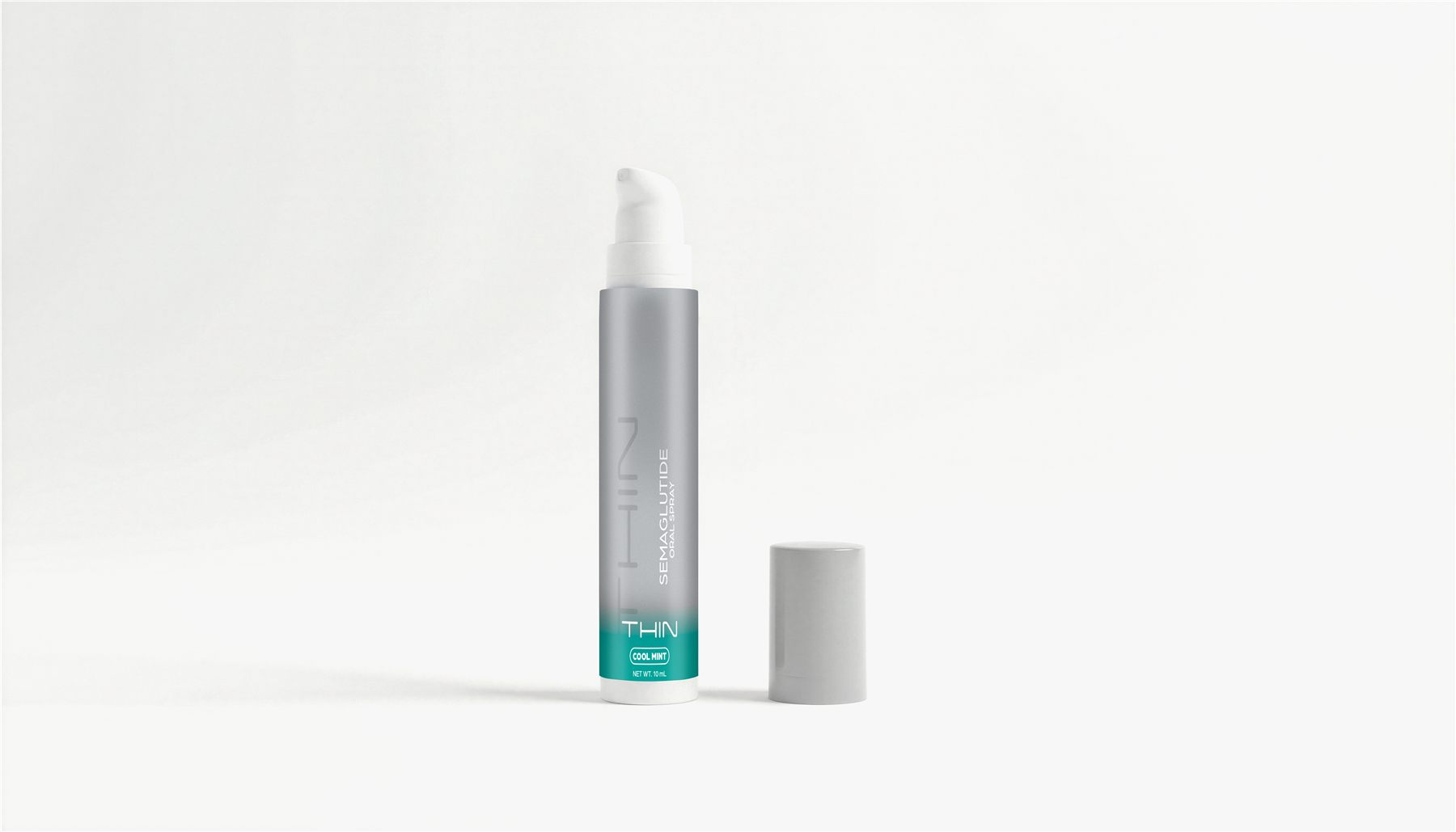
THIN™ packaging shown is a licensed, USP-compliant component. The medication is a compounded drug — not FDA-approved — prepared for each patient by an independent licensed 503A pharmacy pursuant to a prescription.
Injections
Injectable GLP-1 medications are typically given under the skin on a set schedule. For many people, the routine becomes second nature over time. Practical considerations often include preparing and handling the device, rotating injection sites, and disposing of sharps safely. Some injectable products have storage requirements such as refrigeration for a period, which can matter when you're traveling or short on fridge space. Comfort with needles varies widely from person to person.
Pills and capsules
Oral tablets and capsules are a familiar format that most people already know how to fit into a routine. They're generally easy to store and carry. Some oral medications come with instructions about timing relative to food or water, or about not combining doses, so following the label matters. For anyone who dislikes swallowing pills, that's a practical factor worth weighing. As with any format, whether a pill version exists for a given medication depends on the specific product.
Oral sprays (sublingual)
Sublingual sprays are applied under the tongue rather than swallowed or injected. In practical terms, they're needle-free and compact, which some people find easier to keep in a bag or take discreetly. Directions usually involve holding the spray under the tongue briefly rather than swallowing right away. As with pills and injections, storage and handling instructions vary by product, and availability in this format depends on the specific medication and formulation.
Practical factors to weigh
- Routine fit. Which format are you most likely to use consistently, day after day? The most practical option is often the one that fits your life.
- Comfort. Feelings about needles, swallowing pills, or taste under the tongue are all valid and personal.
- Storage and travel. Refrigeration needs, size, and packaging affect how easily a format travels with you.
- Handling and disposal. Some formats involve extra steps like sharps disposal; others don't.
- Availability. Not every medication is offered in every format, and availability can differ between FDA-approved products and compounded ones.
None of these factors makes one route universally "best." They're trade-offs, and the right balance is individual. If you want to see how a needle-free sublingual option is structured, you can read about how our program works.
Important safety information
- • This article is educational only and is not medical advice. Always consult a licensed healthcare provider about starting, stopping, or changing any medication.
- • THIN™, THIN-R™, and THIN-ST™ are prescription-only compounded medications, prepared by licensed 503A pharmacies. They are not FDA-approved, and are dispensed only if a licensed provider determines they are medically appropriate.
- • Payment does not guarantee a prescription. Individual results vary.